9 October 2026
Bespoke Wall Art: How to Create a Piece for Your Room
Plan wall art around your room, taste and budget. Learn what to include in a brief and how a custom art print differs from a handmade commission.
By Ben Gordon
By Ben Gordon · 10 September 2026 · 5 min read
A giclée is a fine-art inkjet print. Learn what the term tells you, how it differs from an edition label, and which paper and framing details to check.
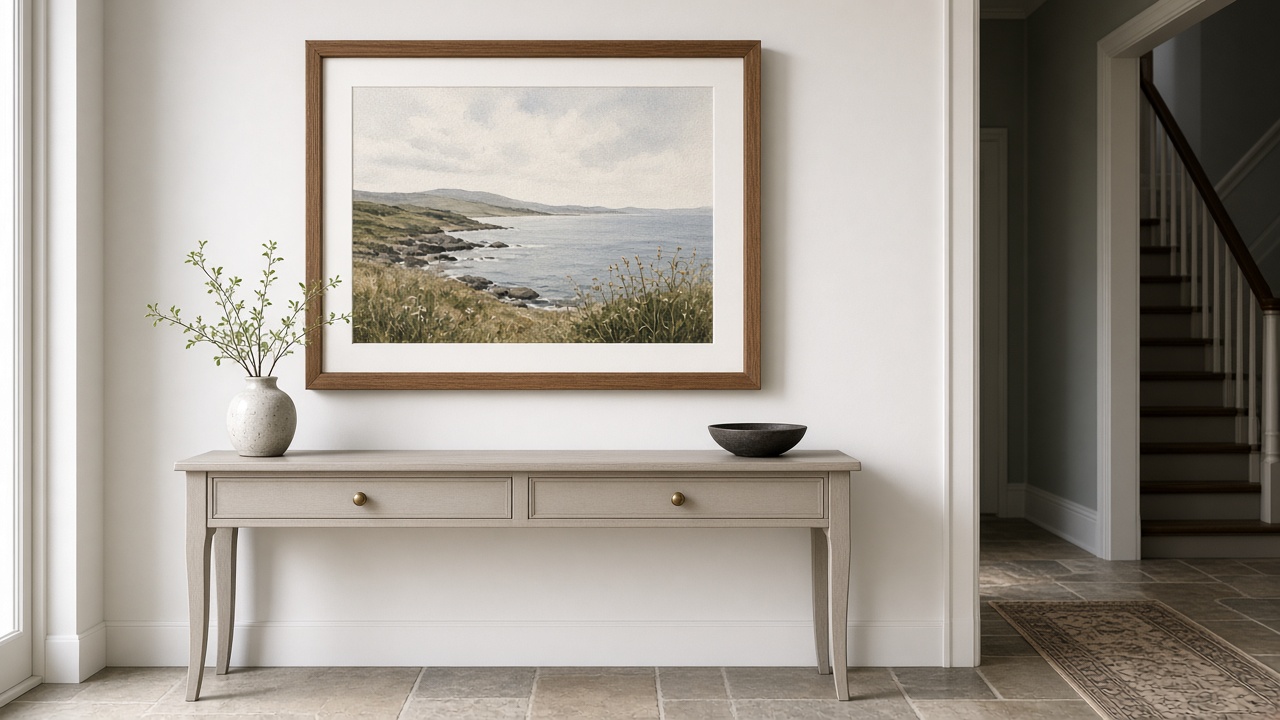
A giclée print is a fine-art print made using inkjet technology. It can reproduce a painting, photograph or digital artwork. The term describes a printing approach; it does not tell you whether the image is exclusive, whether the print is framed or how long it will last.
When comparing products, look at the paper, inks, image preparation and finishing details as well as the word “giclée”.
The Fine Art Trade Guild describes a giclée as a fine-art digital print made from a computer file. It may be a reproduction or an original digital image, and the process can be used on paper or canvas.
That distinction is useful: giclée does not mean a picture was hand-painted, and it is not limited to reproductions of paintings. A digitally created image can be printed through the same process.
The finished result depends on the complete production process. Two products can use the same broad description while offering different papers, finishes and framing options.
A giclée can belong to a limited edition or an open edition. It can be printed in advance or made when an order arrives. None of those choices changes the basic printing method.
A limited-edition label concerns the stated size of the edition. If that matters to you, check the number of prints, the numbering system and any supporting information from the seller. Do not assume that a print is rare or exclusive because it is described as giclée.
Likewise, “printed to order” describes when it is produced. It does not, on its own, mean the image was created specifically for you.
The terms answer different questions. “Poster” can describe a format or use; “giclée” describes a printing process. A poster-style design can be produced as a fine-art inkjet print.
Rather than treating one label as automatically better, compare the actual products. What paper is used? What is the surface finish? Is a frame included? What does the image look like at the size you want?
An inexpensive print can be exactly right for one purpose, while another purchase may call for a particular paper, finish or framing treatment. Choose the specification that suits your use.
Ask for the paper name or specification, its weight and its finish. Smooth and textured surfaces give different appearances. A texture you enjoy on one image may be less suitable for fine text or intricate detail.
Check whether the product has a white border, whether that border is included in the dimensions and how much of the image will be visible once framed.
If longevity is part of the seller's promise, ask which ink and paper combination is used and what evidence supports that claim. The word “archival” is more useful when accompanied by a specific material or test standard.
Avoid interpreting “giclée” as a guarantee that a print will never fade. Display conditions and the complete material combination matter. Ask for care advice for the product you are buying.
A printing method cannot correct every flaw in the source image. Check that the image is suitable for the selected size and that important details survive the crop.
Not every digital image needs upscaling. It depends on its pixel dimensions and the intended print size. Our guide to printing AI art explains the checks in more detail.
Confirm whether you are ordering an unframed print or a framed product. Look at the frame finish, any mount and the outside dimensions, not just the image size.
If the print is glazed, consider reflections from the room's windows and lamps. Check the available glazing options rather than assuming every frame offers the same finish.
Before placing the order, make sure you can answer these questions:
If a detail is important and missing, ask the seller. A clear product description is more useful than a long list of quality adjectives.
Create Prints offers artwork prepared for made-to-order prints, with the available size, format, frame and mount options shown when you order. You can browse existing artwork or create a new image from a description or visual reference.
You can also print an image made in ChatGPT or Midjourney using the Create Prints plugin or MCP connection. Review the selected image and product options before placing the order.
No. It is printed from a digital file. The image may reproduce a painting or may have been created digitally.
No. Printing method and edition size are separate. Look for an explicit edition statement if that matters to you.
No. The process can also be used on canvas. Check the material specified for the particular product you are considering.
No. Framing is a separate product option. Confirm what is included and check the finished dimensions before buying.
Yes. A suitable digital image can be prepared for fine-art inkjet printing. Check file quality, cropping and the relevant image permissions as you would for other artwork.
Use “giclée” as a useful description of the process, then compare the materials and finish. Explore the print shop to find an image you like and review its available options.
Every print is analysed for colour and room fit — or describe your space and we'll make something for it.
9 October 2026
Plan wall art around your room, taste and budget. Learn what to include in a brief and how a custom art print differs from a handmade commission.
By Ben Gordon
4 October 2026
Bring artwork together through colour, subject, frames or spacing. Practical ideas for choosing a pair, adding to an existing print and planning a gallery wall.
By Ben Gordon
25 September 2026
Print a ChatGPT image as a poster or framed print with the Create Prints plugin. Sizes, prices and delivery times for Great Britain and the US.
By Ben Gordon